The machine is only half the equation — your grinder matters just as much — but choosing the right machine for your skill level and budget sets the ceiling on what's possible. The four picks below cover every starting point, from a first-timer on a tight budget to someone ready to invest in a serious setup from day one.
Every machine on this list is semi-automatic, uses a pump (not steam pressure), and is genuinely learnable without a barista background.
Don't skip the grinder. A great machine with a bad grinder will always produce mediocre espresso. If you're working with a limited budget, spend proportionally more on the grinder — it makes a bigger difference. See our grinder guide for where to start.
Quick comparison
| Machine | Best for | Boiler | Price |
|---|---|---|---|
| Breville Bambino Plus Best Pick | Most beginners | Thermojet (3 sec) | ~$499 |
| De'Longhi Dedica Arte | Slim kitchens, tighter budget | Single boiler | ~$199 |
| Breville Barista Express | Grinder + machine in one | Thermocoil | ~$699 |
| De'Longhi Stilosa | True budget entry point | Single boiler | ~$109 |
Best overall: Breville Bambino Plus
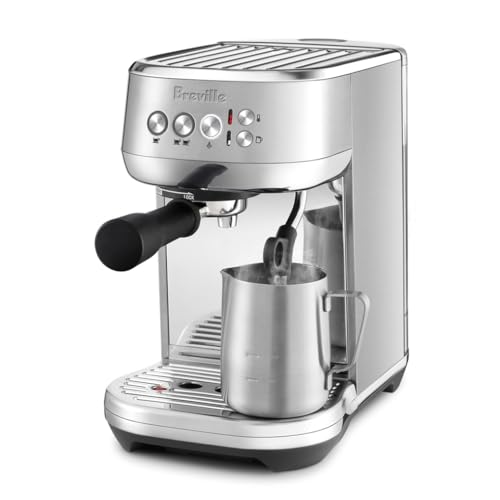
Breville Bambino Plus
The Bambino Plus is the closest thing to a no-compromise beginner machine. It heats up in 3 seconds via Breville's Thermojet system, uses a 54mm portafilter that produces espresso comparable to machines costing twice as much, and comes with an automatic steam wand that textures milk consistently — even before you've learned manual technique. If milk drinks are your focus, it also tops our best espresso machines for lattes guide.
The compact footprint fits easily on most counters, and the single-dial interface is genuinely approachable. This is the machine we'd recommend to most beginners without hesitation.
Best compact: De'Longhi Dedica Arte
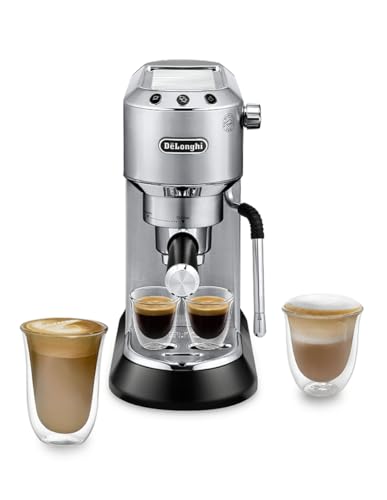
De'Longhi Dedica Arte
At just 6 inches wide, the Dedica Arte is one of the slimmest espresso machines available without sacrificing real espresso capability. It uses a proper 15-bar pump, heats up in around 40 seconds, and ships with De'Longhi's My LatteArt steam wand — a manual wand with a design that makes microfoam easier to achieve than a standard panarello.
This is the move if counter space is limited or the Bambino Plus is out of budget. The Dedica Arte punches well above its price, especially for milk drinks. The main trade-off is the 51mm portafilter, which limits basket options compared to the 54mm machines.
Best all-in-one: Breville Barista Express
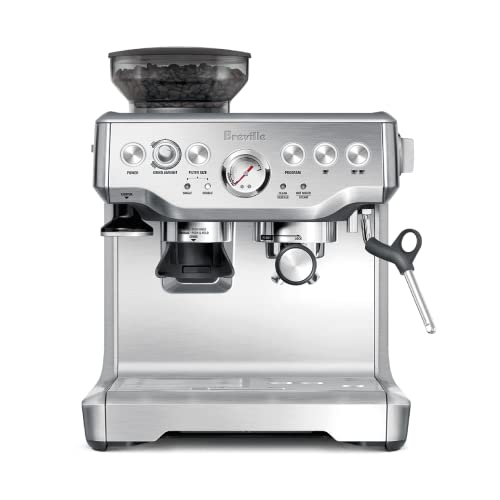
Breville Barista Express
The Barista Express solves the "grinder + machine" problem in one unit with a built-in conical burr grinder. You load beans into the hopper, grind directly into the portafilter, and pull a shot — all without a separate grinder taking up counter space. For a true all-in-one setup, nothing at this price matches it.
The trade-off is flexibility: upgrading the grinder later means buying a new machine too. But for beginners who want quality results without building a multi-component setup, the Barista Express is a genuine shortcut to great espresso from day one.
Best budget: De'Longhi Stilosa
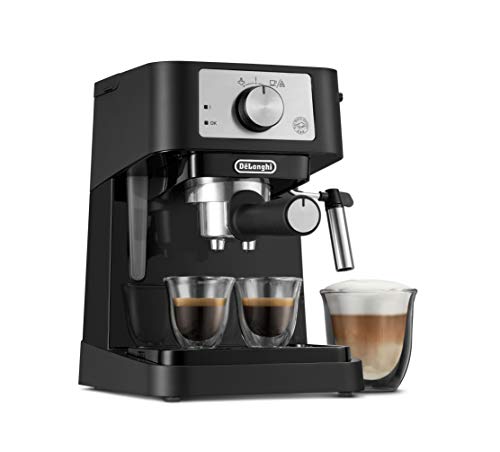
De'Longhi Stilosa
The Stilosa is the honest answer for anyone who wants to try real espresso without a large financial commitment. It uses a genuine 15-bar pump, a stainless steel boiler, and a manual steam wand — the fundamental components you need for proper espresso and milk drinks, at the lowest price point we'd feel comfortable recommending.
Limitations are real: it's slower, less consistent, and will frustrate you at the margins of dialing in. But as a learning machine or a low-risk entry point, it does the job. When you outgrow it, you'll know exactly what to upgrade to.
Shopping this price range specifically? See our full guide to the best espresso machines under $200.
Don't forget the grinder
Whichever machine you choose, your grinder will have a bigger impact on shot quality. See our top picks before you buy.